
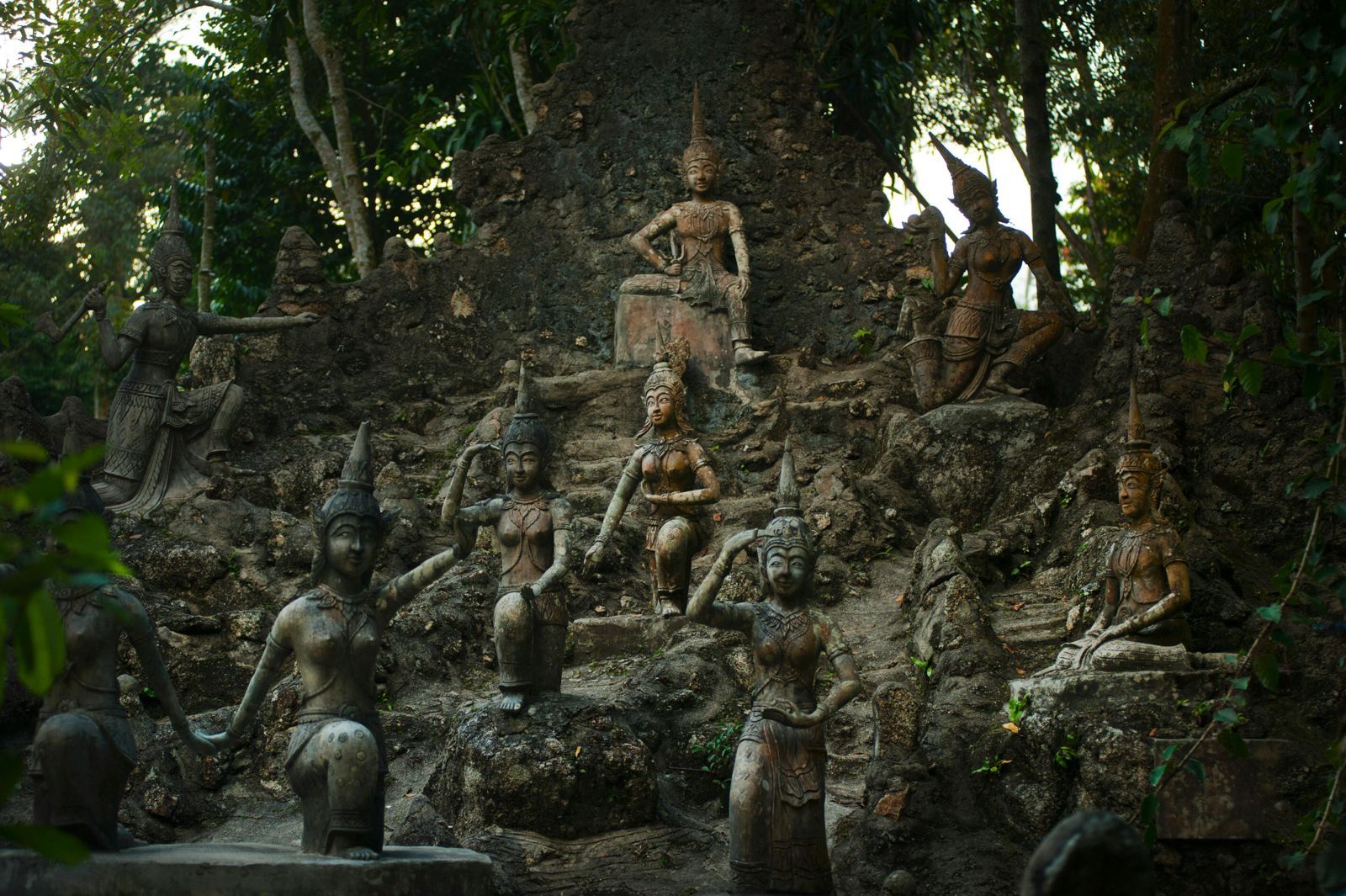
I came to Thailand thinking I was changing countries. Looking back now, I realise I was changing myself.
Before We Start
If you've reached ten years in Thailand, you've probably stopped calling yourself new. You've watched governments come and go, visa rules rewritten more times than you can count, favourite restaurants close their shutters for the last time and new roads appear where there used to be nothing but a field and a stray dog. Friends arrive full of the same excitement you once had. Others leave, sometimes for reasons that make perfect sense and sometimes for reasons that never quite add up. Life carries on regardless, the way it always does.
People still ask me, now and then, whether I still enjoy Thailand after all these years. It's a harder question to answer than it sounds, not because I don't know, but because I've come to think it's the wrong question entirely. Nobody asks whether you still enjoy the town you grew up in. At some point, life stops being about the place itself and becomes about the life you've quietly built there instead. That's roughly where I've ended up, and it took the better part of a decade to arrive at it.
This chapter isn't a checklist of things you'll need to know by year ten, because by this point the checklists have mostly done their job. It's closer to a handful of things I've come to believe are true, gathered over rather longer than ten years, in the hope that a few of them are useful to you long before you get here yourself.
Watching Thailand Change
Nobody warns you, in the first excited years, that the country you fell for won't stay still. It can't. No living place does. The Bangkok I first arrived in had fewer BTS stations, fewer glass towers, fewer of the international chains that now sit confidently on every second corner. Some of that change is genuinely for the better. Healthcare has become faster and more sophisticated, banking has become far less painful than it used to be, and the digital infrastructure that makes remote work possible simply didn't exist in the same way when I first landed.
Some of it, if I'm honest, I quietly mourn. A market I used to walk through most mornings became a shopping mall. A quiet fishing village I once escaped to on weekends now has a four-lane road running through the middle of it. That's not a complaint, particularly. Thai people are entitled to their own development on their own terms, and it isn't my place to wish a country frozen in the version I happened to fall in love with. But it does teach you something about the nature of belonging somewhere long-term: you don't just adjust to a place once and then coast. You keep adjusting, indefinitely, because the place keeps moving too.
The residents who struggle most with long-term life here, I've noticed, are rarely the ones who dislike Thailand as it is. They're the ones still quietly grieving the Thailand they arrived to, twenty years after it stopped existing. Loving a place over a decade means loving what it's becoming, not just what it was the year you fell for it.
Before Thailand
Long before any of this, I spent years as a firefighter back in Britain, a career I was, and still am, genuinely proud of. It teaches you things quickly that most people take a lifetime to learn, if they learn them at all. You learn how fragile a person's circumstances can be, how little warning most disasters give, and that when somebody actually needs help, standing around discussing the situation is not an option. You get on with it, because the alternative is unthinkable.
Looking back, I think that career shaped me a good deal more than I realised at the time, and it certainly shaped the way I first approached Thailand. Everything, in my head, needed sorting immediately. Every problem needed an answer today, every piece of admin needed resolving now, every uncertainty needed closing down before I could relax. Thailand had rather different ideas about that.
Slowly, and it really was slowly, it taught me that not everything in life is an emergency. Some problems solve themselves if you leave them alone for a week. Some simply need patience rather than intervention. And a fair few of the things I once treated as problems weren't really problems at all, just circumstances I hadn't yet learned to sit with. I didn't pick any of that up in a classroom. I picked it up by living here, year after year, until it stopped being a lesson and just became how I was.
Some of what the fire service gave me never left, and I'm glad of that. I still notice when something is genuinely serious rather than merely inconvenient, and I've never lost the instinct to act rather than deliberate when someone actually needs help: a Thai neighbour in trouble, a fellow expat out of their depth with a hospital or an embassy. What changed was learning to reserve that urgency for the moments that truly call for it, instead of spending it on every small frustration a new country throws at you in its first few years.
The Day I Put On the Orange Robe
People are sometimes surprised when they hear I ordained as a Buddhist monk for a period, and I understand why. The truth is, I wasn't trying to become somebody different. I was trying to understand the person I already was a little better, and Thailand offers that opportunity in a way few other places do.
Living as a monk strips life back to almost nothing. Very few possessions, very few distractions, and a great deal of silence. At first that silence is genuinely uncomfortable. You notice how much of ordinary life is designed to keep you from sitting with your own thoughts for too long. Then, gradually, the discomfort turns into something closer to peace.
The biggest lesson I took from that time wasn't really about Buddhism as a religion. It was about simplicity. Most of us spend enormous amounts of energy chasing more: more money, more possessions, more status, more approval from people whose opinions won't matter to us in five years. Some of the happiest, clearest moments of my life happened while I owned almost nothing at all. That's stayed with me ever since, long after the robe went back.
Resident Reflection
Some of the happiest, clearest moments of my life happened while I owned almost nothing at all. That's a lesson simplicity teaches you that acquisition never quite manages to.
Learning Thai Changed Everything
People ask me fairly often whether it's really worth learning Thai, and I answer without hesitation: yes. Not because it will impress anybody, and not because you'll suddenly become fluent overnight, but because language quietly changes the shape of your relationships with the people around you.
At first you're the foreigner asking simple questions, pointing at menus, gesturing at numbers. Years later, if you keep at it, you're genuinely part of the conversation, not translated into it, but inside it. You start catching the humour, the tone, the little turns of phrase that never make it into a phrasebook because nobody thought to write them down. You stop hearing Thailand through translation and start hearing it in Thai, and that changes the texture of everything else.
More importantly, it changes the way Thailand experiences you. Effort, even clumsy effort, is noticed and remembered here far more than most newcomers expect. If you're still building this into your own routine, THAIBK's SOLA is the tool I wish had existed when I was starting out. It handles the cultural context alongside the words themselves, which is the part that actually takes years to pick up on your own.
Understanding Thailand
After twenty-four years, people sometimes assume I must know everything there is to know about Thailand by now. I don't. Thailand still surprises me regularly, and I suspect it always will. That's rather part of its charm, if you let it be.
What I do understand, properly, is the journey rather than the destination. I understand exactly why somebody who's just landed feels overwhelmed within a week. I understand why immigration paperwork feels confusing, why opening a bank account feels like an obstacle course, why buying a first condo feels genuinely intimidating. I understand it because I've stood in those queues myself, asked those same clumsy questions, made most of those mistakes at least once.
Experience, I've come to think, doesn't really mean knowing everything. It means remembering, clearly and honestly, what it felt like not to know anything at all. Those are very different things, and the second one is far more useful to somebody standing where I once stood.
It's also why I'm wary of anyone, including myself on a confident day, who claims to have Thailand fully figured out. The country is too large, too regionally different, and too quietly complicated for any one person's decade to cover all of it. What ten years actually buys you isn't comprehensive knowledge. It's a much better sense of what you don't know, and a much calmer relationship with not knowing it yet.
Home Is a Strange Word
I used to think home was a simple thing to define. The place you were born. The place your family lived. The country printed on your passport. I'm no longer nearly so sure.
Home changes, sometimes more than once in a life, and I think now that it's really wherever your ordinary days happen, wherever people know your name without having to ask, wherever you've built routines, laughed properly, struggled honestly, and quietly become more fully yourself than you were before you arrived.
For me, part of that will always be Britain. Part of it, now, will always be Thailand. I stopped trying to choose between the two a long time ago, and I think that stopping was itself the lesson, not picking a winner, just letting both be true at once.
The Family Back Home
Nobody quite prepares you for what a decade abroad does to your relationship with the people you left behind. In the early years, the distance feels urgent. You call more than you strictly need to, you feel every missed birthday as a small failure, you carry a low hum of guilt that never fully switches off. That doesn't disappear entirely, even after ten years, but it changes shape.
Video calls do more work than anyone gives them credit for. A weekly call with a parent, kept up faithfully for years, ends up closer and more honest than the sporadic pub catch-ups I used to have with the same person when I lived twenty minutes away. Some relationships thin out with distance, and that's a genuine loss worth naming rather than glossing over. Others, oddly, strengthen, because a phone call from Thailand has to actually be a conversation, not just proximity mistaken for closeness.
The visits home change too. In year one they felt like an escape hatch, a reassurance that the old life was still there if I needed it. By year ten they feel like exactly what they are: a visit. Warm, valuable, sometimes disorienting in how little and how much has changed, and always, eventually, ending with the quiet relief of getting back on a plane heading the other way. That relief isn't a betrayal of home. It's just what it feels like when you've genuinely built a second one.
Nobody Stops Learning
This might be the single biggest thing Thailand has taught me. Nobody finishes learning, not after one year, not after ten, not after twenty-four. Every year I still discover something I didn't know. Sometimes it's about Thailand itself, sometimes it's about people in general, and sometimes, uncomfortably, it's about myself.
The day you decide you've got life fully worked out is usually the day life quietly reminds you that you haven't. Stay curious. Ask the question even when you feel you should already know the answer. Listen considerably more than you speak. You'll be surprised, even after a decade, how much there still is left to learn.
The People Who Stayed
Ten years gives you a strange vantage point on the expat community itself. You watch an enormous number of people arrive, full of the same certainty I once had, and you watch a surprising number of them leave again within a year or two, sometimes because Thailand genuinely wasn't right for them, sometimes because life back home pulled them back, sometimes for reasons that were never entirely clear even to them.
It used to sting, in the early years, watching people I'd grown close to pack up and go. Eventually I understood it differently. A transient community isn't a failed one. It's simply the nature of a place that draws people from everywhere, for every different reason, at every different stage of life. Some friendships were only ever meant to last eighteen months, and that doesn't make them any less real while they lasted.
What surprised me more was noticing who stayed. It was rarely the people with the most money, or the grandest plans, or the loudest opinions about how Thailand ought to be run. It was almost always the quiet ones: the people who'd stopped treating Thailand as a project to be managed and started simply living in it, the same as anywhere else. If you're still in your first few years and wondering whether you'll be one of the people who stays, that's usually the tell.
Why I Built THAIBK
People occasionally ask why I decided to build THAIBK, and the honest answer is simple: because I wish something like it had existed when I first arrived. Back then, reliable information wasn't easy to find. One forum told you one thing. A Facebook group told you the opposite. Somebody confident in a bar told you something different again, with total conviction, and you spent more time working out who to believe than actually solving whatever problem you had.
I remember thinking, more than once, that there had to be a better way than that. Not another site of copied, half-updated articles. Not another travel blog written by somebody who'd spent a fortnight here. Something built by someone who had actually lived it, someone prepared to say "I don't know" when that happened to be the honest answer, and prepared to update the information the moment the rules changed underneath it, rather than leaving a three-year-old post to mislead the next person who found it.
That's why THAIBK exists. Not because I consider myself an expert, very far from it, but because I've spent a great many years learning, making mistakes, starting again, changing my mind and, slowly, growing. If sharing what that process taught me helps even one person settle into Thailand with a little more confidence than I had, every hour spent building this platform has been worth it.
It's also why the guides, planners and tools on this site keep changing rather than sitting untouched once they're published. Thailand doesn't stay still, as I've said, and a resource that stops updating is really just another forum post slowly going out of date, however well it was written the day it went up. Keeping it current isn't a feature. It's the whole point.
If I Could Meet the Man Who First Arrived
I think about that younger version of myself now and then, standing outside the airport, suitcase by his side, a mixture of excitement and nerves he wasn't entirely able to name, trying to picture what this life would actually become and getting almost none of it right.
If I could sit down with him for half an hour today, I wouldn't bury him in advice. I'd tell him to slow down, because he doesn't need all the answers on day one, and most of the questions he's anxious about will answer themselves in time anyway. I'd tell him to enjoy the journey rather than rushing toward some imagined finish line, to speak to more local people than he plans to, to listen more carefully than he's used to, to ring his family more often than feels strictly necessary, and not to be so frightened of the mistakes he's about to make.
Some of the best things that will ever happen to him haven't even crossed his mind yet, and no amount of planning would have let him see them coming. And I'd tell him one more thing, the thing I most wish somebody had said to me: you'll be alright.
I don't think he'd fully believe me, if I'm honest. I don't think I would have, in his position. That's probably as it should be. Some things you simply can't be told, only lived through, and arriving at your own version of "you'll be alright" the hard way is part of what makes it worth something once you finally get there.
Some of the best things that will ever happen to you haven't even crossed your mind yet.
Before You Go
If you've made it this far, thank you. Genuinely. I didn't expect these pages to become quite so personal when I started, but somewhere along the way I realised it isn't really possible to talk honestly about living in Thailand without talking a little about life itself. The two turned out to be harder to separate than I'd assumed.
Over the years I've trusted the wrong people more than once. I've made some good decisions and a fair few poor ones. There have been moments I genuinely wondered what on earth I was doing, and moments I couldn't picture being anywhere else on earth. I suspect that's simply what life is, wherever you happen to choose to live it.
When I first had the idea for THAIBK, I thought I was building a website. Looking back now, I think I ended up building something a little different. You'll find guides here, and planners, and tools, and information that's kept genuinely current, but I hope you'll also find experience sitting alongside all of it. Not because my experience matters more than anyone else's, but simply because it's real, and it was hard-won.
I'm still learning, and I don't imagine that ever really stops. Thailand still surprises me. People still surprise me. Life, generally, still surprises me, and I hope it keeps doing so for a good while yet.
So don't think of this as the end of anything. Think of it as the end of the first conversation. There are stories I haven't told you yet: including, before too long, one about the scams I nearly fell for myself, and what they taught me about trusting the wrong people for the right-sounding reasons.
Take care of yourself. I hope Thailand gives you as much as it's given me, and if our paths ever happen to cross somewhere, come and say hello. I'd genuinely like that.
There's plenty more to come. I'll see you in the next story.