
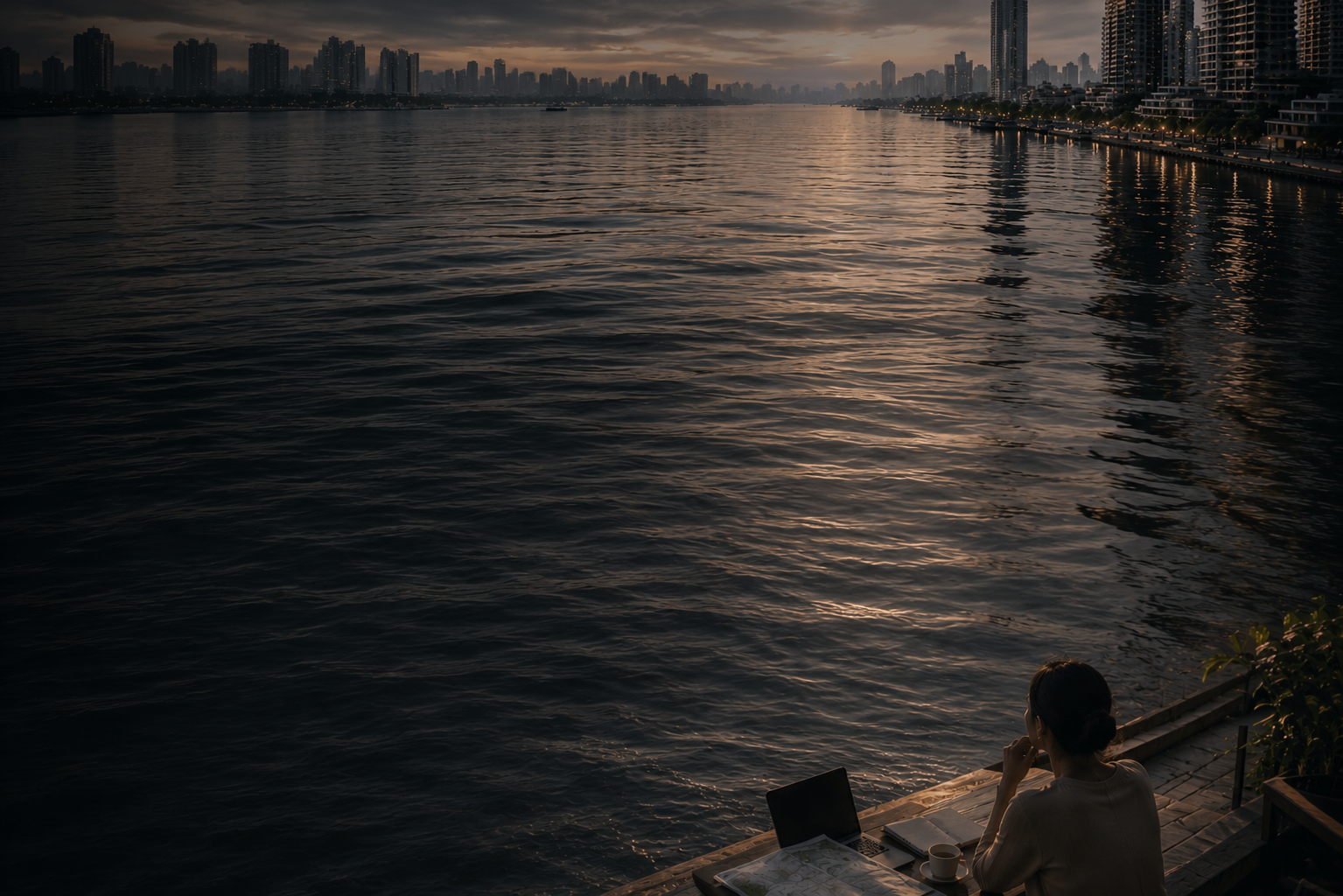
No matter why you've chosen Thailand (retirement, work, love, business, or simply the desire for a different life), there is one thing almost everyone has in common. You think you know what to expect. You've watched the YouTube videos, joined the Facebook groups, read the blogs, and spent weeks researching visas, apartments, healthcare and the cost of living. You arrive believing you've done your homework. Then Thailand gently reminds you that reading about a country and living in one are two very different things.
This guide isn't about finding the cheapest beer, avoiding tourist scams or telling you which island has the best beaches. There are thousands of websites that already do that. This guide is about what happens after the excitement of moving begins to settle. It's about the first year, the year where Thailand slowly stops feeling like somewhere you're visiting and starts becoming somewhere you're building a life.
Some parts will surprise you. Some parts will challenge you. Many parts will delight you. Most importantly, you'll discover that almost everything you're about to experience has already been experienced by thousands of people before you. You're not alone.
Every Journey Starts Differently
No two people arrive in Thailand for exactly the same reason. Some have dreamed about living here for decades after countless holidays. Others accept a job opportunity that changes their life overnight. Some fall in love with Thailand. Others fall in love with someone who lives here. Retirees often arrive looking for a slower pace of life. Digital professionals are attracted by the freedom to work from almost anywhere. Families come searching for a different lifestyle. Students arrive wanting to learn both a language and a culture.
Despite those different beginnings, something remarkable happens. Within a few months, most people begin sharing many of the same experiences. The details are different. The emotions are remarkably similar.
That is why this guide exists. Not because everyone's journey is identical, but because there are patterns that almost everyone recognises. Understanding those patterns makes the first year much easier to navigate.
The First Breath of Warm Air
For many people, the moment they step outside the airport stays with them forever.
The warm air.
The scent of food drifting through the evening.
The organised chaos of taxis arriving and departing.
The unfamiliar language surrounding you.
The feeling that you've finally arrived somewhere you've imagined for years.
For a moment, everything feels possible. It's difficult not to smile. You notice things that tourists rarely appreciate: the politeness, the efficiency of the airport, the respect people show one another, the constant movement of a city that never seems to stop.
Even if you've visited Thailand many times before, arriving with the knowledge that you're not simply here for a holiday feels completely different. This time, you're not counting the days until your flight home. This time, you're beginning something new. That thought is both exciting and slightly overwhelming. Both feelings are perfectly normal.
The Honeymoon Period
The first few weeks are wonderful. Everything feels fresh. Every meal feels like an adventure. You find yourself comparing prices with home almost constantly.
A meal that would cost three times as much back home.
Fresh fruit everywhere.
Coffee shops tucked away down quiet streets.
Markets full of colours, sounds and aromas you've never experienced before.
Simple errands suddenly become enjoyable. Even going to the supermarket feels interesting because every shelf contains something unfamiliar. Friends and family back home ask for photographs. Your social media fills with sunsets, temples and street food. People begin telling you how lucky you are. For a while, they're right. You probably are.
The important thing is to enjoy this stage without believing it lasts forever. It won't. Not because Thailand becomes disappointing, but because it becomes normal. And strangely enough, that's actually when life becomes even better.
When the Holiday Ends
Nobody tells you exactly when it happens. There isn't a particular date. There isn't a dramatic moment. One morning you simply realise you're no longer behaving like someone on holiday.
Instead of searching for attractions, you're searching for a hardware shop.
Instead of planning island trips, you're arranging an internet installation.
You're comparing electricity bills.
Looking for decent pillows.
Trying to understand why your washing machine has decided today is the day it won't drain.
You've crossed an invisible line. You're no longer experiencing Thailand. You're living in Thailand.
Many newcomers mistake this moment for disappointment. It isn't. It's progress. You've stopped observing life here. You've started participating in it. That's a far more meaningful experience.
Resident Reflection
You've crossed an invisible line. You're no longer experiencing Thailand. You're living in Thailand, and that's a far more meaningful experience than the one you arrived for.
The Myth of Cheap Thailand
One of the biggest misconceptions is that everything in Thailand costs very little. The truth is far more balanced. Yes, local food can be excellent value. Public transport is often affordable. Domestic travel is relatively inexpensive. Fresh produce is plentiful. But living here isn't simply about buying street food. Many of the things Westerners naturally want can cost far more than expected.
Imported groceries.
International schools.
Private healthcare without insurance.
Western wines.
Quality coffee machines.
Electronics.
Good furniture.
Pet care.
Certain medicines.
Visa expenses.
Air conditioning during the hottest months.
Condominium maintenance.
None of these are necessarily expensive by international standards, but they remind you that Thailand isn't a magical place where money suddenly stops mattering. The people who thrive financially are rarely the ones chasing the cheapest lifestyle. They're the ones who build realistic budgets and understand where they choose to spend their money. Living well isn't always about spending less. It's about spending wisely.
If you haven't already mapped out what a realistic year actually costs, THAIBK's Budget Planner is worth ten minutes of your time. Most people who use it discover they were either needlessly anxious or quietly overspending, and both are worth knowing early.
Building a Base, Not Just Finding a Flat
Almost everyone signs a lease too early. It's an understandable mistake. You want somewhere that's yours, somewhere the searching stops, but a year-long contract signed in your second week is a bet on a neighbourhood you've barely experienced. You don't yet know whether you'll want to be near the BTS or happy on a motorbike, whether you'll gravitate toward the expat-heavy sois or the quieter residential streets a few minutes further out, or whether the market three streets over turns out to matter more to your daily happiness than the size of the balcony.
A short-term let for the first month or two, even at a slightly higher nightly rate, tends to pay for itself many times over. It buys you the ability to actually live in two or three areas before committing, and it removes the pressure that makes people sign contracts they later regret. THAIBK's Property Concierge exists partly for this reason: matching people to areas that actually suit the life they're building, not just the flat that photographed well.
What makes somewhere feel like a base has very little to do with the property itself. It's the accumulation of small, repeated contact: the same 7-Eleven, the same motorbike taxi driver who starts to recognise you, the same stretch of pavement you walk at the same time most evenings. That familiarity builds slowly, and it builds through repetition, not through finding the "right" address on day one.
Finding Your New Routine
One of the biggest changes during your first year isn't something you'll notice overnight. It's the gradual shift from discovering Thailand to simply living here.
During your first few weeks, every day feels different. You're exploring new neighbourhoods, trying restaurants you've found online, visiting shopping malls you've never heard of, and saying yes to almost every opportunity that comes your way.
Then, almost without noticing, life begins to settle into a rhythm. You find yourself visiting the same supermarket every week because you know where everything is. You discover a café where the staff recognise you before you've even ordered. The security guard at your condominium smiles as you walk past, and the woman selling fruit at the local market starts putting aside your favourite mangoes because she knows you'll be there every Saturday morning.
These small moments might seem insignificant, but they are often the first signs that Thailand is beginning to feel less like a destination and more like home.
Routine has a calming effect. It removes uncertainty and replaces it with familiarity. Suddenly, tasks that once seemed intimidating (topping up your phone, paying utility bills, navigating public transport) become second nature. It's easy to underestimate how important this stage is. Many people spend months chasing the next exciting experience, believing they should still feel like tourists. In reality, creating everyday routines is one of the healthiest parts of settling into a new country. It's what transforms an exciting adventure into a sustainable life.
Understanding That Thailand Has Its Own Way
One lesson that almost every foreigner learns is that Thailand doesn't work like the country they left behind. That isn't a criticism. It's simply a fact.
Many newcomers arrive expecting familiar systems and processes, only to become frustrated when things don't happen in the order or at the speed they're used to. A simple task may involve several different offices. A piece of paperwork might require an extra copy you weren't expecting. An appointment that feels urgent to you may be approached much more calmly by everyone else involved.
It's tempting to compare everything with home. Resist that temptation. Thailand has developed its own way of doing things over many generations, shaped by its culture, traditions and social values. Once you stop measuring every experience against your previous life, many frustrations begin to disappear.
You'll also discover that flexibility is often more valuable than perfect planning. Plans change, traffic delays are common, and sometimes the best solution is simply to smile, adjust and carry on. This ability to adapt is one of the greatest skills you'll develop during your first year.
Learning to Slow Down
For many Westerners, life has always been driven by schedules. Every meeting has a time. Every task has a deadline. Every minute is accounted for. Thailand encourages a different pace. That doesn't mean people don't work hard. They do, but there is often less urgency surrounding everyday life.
Meals are enjoyed rather than rushed.
Families spend time together.
Neighbours stop to chat.
Shop owners remember your name.
People are generally more willing to pause and help than many newcomers expect.
At first, this slower pace can feel unfamiliar. Some people even mistake it for inefficiency. Eventually, many begin to appreciate it. You stop checking your watch quite so often. You become less stressed by minor inconveniences. You realise that arriving five minutes later than planned rarely matters.
This isn't about becoming lazy. It's about recognising that life doesn't always need to be lived at full speed. For many people, that's one of the greatest gifts Thailand quietly offers.
Learning a Little Thai Goes a Long Way
One of the most rewarding decisions you can make during your first year is to learn some Thai. Not because you need to become fluent (very few foreigners ever do) but because making the effort changes how you experience everyday life.
Simple greetings.
Saying thank you.
Ordering food.
Asking how much something costs.
Understanding numbers.
These small steps build confidence far more quickly than people expect. You'll also notice something else: people smile differently when you try. Nobody expects perfect pronunciation. In fact, many Thai people appreciate the effort far more than the accuracy. Conversations become warmer. Everyday interactions become easier. You feel less like an outsider.
Learning the language also opens doors that many visitors never discover. Local cafés become easier to enjoy. Small family-run businesses become less intimidating. Travelling beyond tourist areas suddenly feels much more accessible. Perhaps most importantly, learning Thai shows respect for the country you've chosen to call home. That respect is almost always returned.
Building a small amount of language practice into your existing routine works far better than treating it as a separate project you never quite start. Tools like SOLA are useful here precisely because they handle cultural context and tone alongside translation, so you're not just learning words in isolation. You're learning how they actually get used.
The Weather Is More Than Sunshine
Most people move to Thailand dreaming about warm weather. They picture blue skies, beaches and endless sunshine. And yes, there are plenty of days that feel exactly like that. But living here means experiencing every season, not just the ones shown in holiday brochures.
The hot season can be intense, especially for those arriving from cooler climates. Even simple activities such as walking to the local shop can feel exhausting during the middle of the afternoon. The rainy season often surprises newcomers too. Storms can arrive suddenly, bringing spectacular downpours that disappear almost as quickly as they arrived. Streets that were dry an hour earlier may briefly flood before returning to normal. Then there is the cooler season, particularly in the north of Thailand, where evenings can become surprisingly fresh.
Over time, you learn to work with the climate rather than against it. You plan outdoor activities earlier in the day, carry water more often, keep an umbrella close by and begin to understand why many local people avoid standing in direct sunlight whenever possible. The weather stops being something you notice every day. It simply becomes another part of life.
Food Becomes Part of Everyday Living
Thai food is one of the country's greatest pleasures, but living here changes your relationship with it. As a visitor, you're excited to try everything. As a resident, you start finding favourites.
You discover the noodle shop that always gets it right.
The family restaurant where the owner remembers exactly how spicy you like your food.
The market stall selling fruit that's perfectly ripe every morning.
At the same time, you'll probably still crave familiar meals from home. There's nothing wrong with that. One of the joys of modern Thailand is that you don't have to choose between one cuisine and another. Large cities offer an extraordinary variety of international food alongside traditional Thai cooking.
Most long-term residents eventually find a balance. Some meals are unmistakably Thai. Others remind them of home. Together, they create a lifestyle that feels uniquely their own.
Looking After Your Health
One of the first things many newcomers notice is just how accessible healthcare can be in Thailand. Need to see a doctor? In many parts of the country, you can often arrange an appointment the same day. Hospitals are generally clean, modern and well organised, particularly in larger cities such as Bangkok, Chiang Mai and Phuket. Many doctors speak excellent English, and private hospitals are accustomed to treating international patients. For someone arriving from a healthcare system with long waiting times, the experience can feel remarkably straightforward.
That doesn't mean healthcare is something to leave to chance. Medical treatment in Thailand is excellent, but it isn't free. A routine consultation may be inexpensive, but specialist treatment, surgery or a stay in hospital can become costly very quickly. The peace of mind that comes from having suitable health insurance is difficult to overstate. During your first year, it's worth taking time to understand how healthcare works where you live. Know where your nearest hospital is, keep important documents together and familiarise yourself with the services available. It's one of those tasks you hope you'll never need, but you'll be grateful you've done if the time ever comes.
Good health is about more than hospitals too. Thailand encourages a more active lifestyle almost without trying. Parks fill with walkers in the early morning, swimming pools are common in condominiums, and fresh fruit is available throughout the year. Many people find themselves walking more, eating differently and spending more time outdoors than they did back home. For some, moving to Thailand becomes the beginning of a healthier chapter in life. If you haven't yet worked out how you'll approach cover, THAIBK's Healthcare Planner is a sensible place to start.
Understanding the Visa Journey
No matter how beautiful the beaches are or how friendly your neighbours become, there is one subject every foreign resident eventually needs to understand. Your visa. It's rarely anyone's favourite topic, but it is one of the most important.
The first year often involves learning unfamiliar terminology, extension dates, reporting requirements and supporting documents. It can feel overwhelming at first, particularly when you hear conflicting advice online. One forum insists you need one document. Another says something completely different. A YouTube video from three years ago confidently explains a process that no longer exists. This is where many newcomers become unnecessarily anxious.
The reality is that immigration rules do change, and what applied to one person may not apply to another. Your age, nationality, reason for staying and visa type all influence the requirements. Rather than relying on rumours or outdated social media posts, make a habit of using reliable and up-to-date information. Keep digital copies of important documents, note important dates in your calendar and deal with immigration matters well before deadlines.
The paperwork may never become enjoyable, but it does become familiar. After your first year, you'll probably look back and wonder why it seemed so intimidating in the beginning. THAIBK's Visa Planner is kept current for exactly the reason described above, so you're working from this year's rules, not a three-year-old thread.
Building Friendships
One of the biggest misconceptions about moving abroad is that meeting people will happen naturally. Sometimes it does. More often, it takes a little effort.
Thailand has a wonderfully diverse international community. You'll meet retirees, entrepreneurs, teachers, digital professionals, families and travellers from every corner of the world. Many are incredibly welcoming because they remember exactly what it felt like to arrive knowing nobody.
It's tempting to build your entire social life around bars or nightlife, particularly if you're living in one of Thailand's entertainment areas. While there's nothing wrong with enjoying an evening out, lasting friendships are often built elsewhere.
Join a local sports club.
Attend community events.
Take a cooking class.
Volunteer.
Learn Thai.
Explore hobbies you've always wanted to try.
Shared interests tend to create stronger friendships than shared postcodes. Don't be discouraged if people come and go. Thailand has a naturally transient international population. Friends move home, visas expire and opportunities take people in different directions. That's simply part of expat life.
The friendships that remain are often remarkably strong because they're built on shared experiences that few people back home truly understand. THAIBK's own Connect community exists for the earlier, harder part of this: a place to ask the questions that feel too small to ask anywhere else, and to find people a few months or years further along the same road.
Understanding Thai Culture
One of the greatest privileges of living in Thailand is experiencing a culture that has developed over thousands of years. You'll quickly notice that everyday interactions are often more polite, more respectful and less confrontational than many Westerners are used to.
Raising your voice rarely improves a situation.
Embarrassing someone publicly is generally avoided.
Respect for family, elders and social harmony plays an important role in daily life.
This doesn't mean everyone agrees all the time. Of course they don't. It simply means disagreements are often handled differently. As a newcomer, curiosity will serve you far better than judgement. If something surprises you, ask why rather than assuming it's wrong. Observe before criticising. Listen before comparing.
Over time, you'll begin to understand that many behaviours which initially seemed unusual are rooted in values that place great importance on kindness, patience and maintaining harmony within the community. You don't have to abandon your own culture to appreciate someone else's. In fact, many long-term residents say living in Thailand gave them a fresh perspective on their own lives as well.
Missing Home Doesn't Mean You've Failed
At some point during your first year, something unexpected happens.
It might be Christmas.
A birthday.
A family wedding.
A football match.
Or perhaps you simply wake up one morning missing familiar voices and familiar places.
Homesickness often arrives quietly. Many people feel guilty when it happens. After all, they've chosen this new life. Why should they miss the old one? The answer is simple. Because both things can be true. You can love your new life while still missing parts of the one you left behind.
Technology helps enormously. Video calls make family feel closer than ever before, and flights home are always an option when circumstances allow. Most importantly, remember that homesickness usually comes and goes. It isn't a sign you've made the wrong decision. It's simply a reminder that you've lived a life worth remembering.
As your first year progresses, you'll begin creating new traditions alongside the old ones. Favourite cafés replace favourite pubs. Local festivals become annual highlights. Friends in Thailand become just as important as friends back home. Your life expands rather than being replaced. And that's one of the most rewarding parts of living abroad.
The Day Thailand Starts Feeling Like Home
Nobody can tell you exactly when it happens. It isn't marked on a calendar, and there isn't a single moment when everything suddenly changes. Instead, it's a collection of small moments that quietly come together.
You stop converting every price into pounds, euros or dollars.
You know which queue to stand in at the supermarket.
You have a favourite coffee shop.
The lady at the local fruit stall smiles because she already knows what you're going to buy.
The security guard at your building greets you by name.
You instinctively know which side of the BTS platform to stand on.
You no longer need Google Maps to get home.
Without realising it, Thailand has stopped being somewhere you're trying to understand. It has become somewhere you belong.
That doesn't mean everything is perfect. There will still be frustrating days. Traffic will test your patience. Immigration paperwork will never become exciting. The weather will still surprise you. You'll occasionally miss home. But those moments become part of everyday life rather than obstacles to enjoying it. One of the greatest gifts of your first year isn't learning how Thailand works. It's discovering that you've become more adaptable, more patient and more open-minded than you were when you arrived. Thailand changes many people, often in ways they never expected.
Without realising it, Thailand has stopped being somewhere you're trying to understand. It has become somewhere you belong.
The Mistakes Almost Everyone Makes
If there's one reassuring thing to remember, it's this. Almost every newcomer makes mistakes.
You will almost certainly pay too much for something at least once.
You'll choose the wrong area to live before discovering somewhere that suits you much better.
You'll misunderstand something because of the language barrier.
You'll probably believe advice from someone online that turns out to be completely wrong.
You may even spend money on something you later realise you didn't need.
None of these moments define your experience. They're simply part of learning. The people who build happy, successful lives in Thailand aren't those who avoid every mistake. They're the people who learn from them without allowing them to become reasons to give up.
Every long-term resident has stories they laugh about today but found incredibly frustrating at the time. One day, you'll probably be telling those stories to somebody who's just arrived themselves.
Appreciating the Everyday
When people imagine life in Thailand, they often picture beaches, temples and tropical islands. Those places are wonderful, and you'll hopefully enjoy many of them during your first year. But the memories that stay with you are often much smaller.
The smell of fresh coffee as your local café opens each morning.
Watching a summer storm roll across the city from your balcony.
Finding a tiny family-run restaurant that serves the best meal you've ever had.
Walking through a market on a quiet Tuesday evening.
The familiar faces you pass every day.
The feeling of stepping outside in January wearing a T-shirt while friends back home are scraping ice from their windscreens.
These are the moments that become your real life. Not because they're extraordinary. Because they're ordinary. They become part of who you are.
Looking Back at Your First Year
If someone could meet the version of you that stepped off the plane twelve months ago, they'd probably notice quite a few changes.
You worry less about the unknown.
You solve problems more calmly.
You've learned to accept that different doesn't mean wrong.
You understand more Thai than you realise.
You know your way around your local area without thinking.
You've built routines.
Made friends.
Created memories.
Most importantly, you've built confidence. The confidence that comes from knowing you can create a life somewhere completely different from the place you once called home. That's something nobody can ever take away from you.
What We Hope You Take From This Guide
If you remember nothing else from your first year, remember these thoughts.
Be patient with yourself. No one settles into a new country overnight.
Stay curious. The more willing you are to learn, the richer your experience will become.
Respect the culture. You don't have to understand everything immediately, but approaching Thailand with humility will open far more doors than arriving with expectations that everything should work as it does back home.
Build routines. The smallest habits often create the strongest sense of belonging.
Invest in your health.
Take your visa responsibilities seriously.
Keep learning.
And remember that some of the best experiences happen when you stop trying to recreate the life you left behind and fully embrace the one you're building.
Your Journey Is Only Just Beginning
By now, you've experienced what many people describe as the hardest part of living abroad. Not because Thailand is difficult. Because building a new life anywhere takes time.
The uncertainty of those first few months begins to fade. The questions become easier to answer. The unfamiliar becomes familiar. The place that once felt like an adventure starts to feel like home.
From here, life often changes in ways you never expected. Opportunities appear. Friendships deepen. Neighbourhoods become communities. You begin making decisions not for next month, but for the next five years. That brings new challenges, new rewards and a completely different perspective.
If this guide has helped you understand your first year, the next chapter of your journey starts with Year Five, where we'll explore what long-term life in Thailand really looks like, from putting down roots and managing finances to building a sustainable, rewarding future.
Because moving to Thailand isn't the destination. For many people, it's where the next chapter of life truly begins.