
Loading...
Loading...
Thailand 2026 Calendar
From the city-wide water fights of Songkran to the silent beauty of Loi Krathong, Thailand's festival calendar is a rich, living experience. Master the practicalities of expat life during these unmissable moments.
Thai New Year
Songkran (13-15 April) is Thailand's official New Year. While its roots are in a gentle ritual of blessing, it has evolved into a massive city-wide water fight. If you step outside in festival zones, you will get wet.
Dates 2026
13-15 April
Public holidays: 12-16 April
Transport
Book Early
Busiest domestic travel period
Safety
Waterproof Mode
Seal phone/wallet before exit

One of the wonderful things about Thailand's festivals is that visitors are genuinely welcome to experience them. Whether you're watching lanterns drift into the night sky, joining a Songkran celebration or visiting a local temple fair, you'll often find people happy to include you.
The key is remembering that you're taking part in someone else's tradition. Approach it with curiosity and respect, and you'll almost always be met with warmth.
Before attending any festival, spend a few minutes learning why it's being celebrated. Knowing that Songkran is about renewal rather than simply throwing water. Understanding that Loy Krathong expresses gratitude for water rather than simply floating candles. Recognising that Buddhist holy days are times of reflection rather than entertainment.
This small amount of preparation changes the way you experience the event. Instead of simply watching it, you begin to understand it.
Many festivals include visits to temples or religious ceremonies. Even if celebrations continue outside afterwards, modest clothing is always appreciated when entering sacred places.
Cover your shoulders where appropriate. Avoid revealing clothing inside temple grounds. Remove your shoes before entering temple buildings. These simple gestures show respect for the people around you and the traditions they are observing.
If you're unsure what to do, watch the local people. Notice where they stand. How they behave. When they speak. When they remain quiet. Thailand is remarkably forgiving of visitors who make honest mistakes, but people always appreciate those who take the time to observe before joining in.
Often, simply following the example of those around you is the best guide you'll ever need.
Thailand's festivals are incredibly photogenic. It's tempting to photograph everything. Most people don't mind, but remember that some ceremonies are deeply personal or religious.
Avoid pushing through crowds for the perfect picture. Don't interrupt prayers. Be considerate when photographing monks or people making merit. Sometimes putting the camera down for a few minutes allows you to experience far more than any photograph can capture.
The best festival experiences rarely come from trying to be the centre of attention. Smile. Accept invitations graciously. Be patient. Respect local traditions. Enjoy the moment without feeling the need to turn every experience into a social media post.
When people see that you're genuinely interested in learning rather than simply observing, they're often delighted to share their traditions with you. Those unexpected conversations and shared moments frequently become the memories visitors treasure most.
Before I lived in Thailand, I thought festivals were mainly about entertainment. A chance to have fun. Watch a parade. Enjoy some good food. Take a few photographs.
Thailand gradually taught me that festivals can mean something much deeper.
One of the things that surprised me was how much preparation goes into even the smallest local festival. Communities decorate temples. Families organise food. Volunteers prepare stages and seating. Children rehearse performances. Monks make preparations for ceremonies.
By the time visitors arrive, the celebration has often been weeks in the making. That sense of community effort is something you quickly come to admire.
The older I became in Thailand, the more I realised that many festivals aren't really about the public celebration at all. They're about families spending time together. Children returning home. Grandparents seeing relatives they haven't met for months. Meals shared around one table. Temple visits made together.
The public event may last a day. The family memories often last much longer.
No matter how modern Thailand becomes, I found that many festivals still begin with the temple. People make merit. Offer food to monks. Light candles. Pray. Spend quiet moments reflecting before joining the larger celebrations outside.
It's a gentle reminder that many festivals haven't lost their original purpose. They've simply grown to include new ways of celebrating alongside long-standing traditions.
One of the biggest lessons Thailand taught me is that celebration and respect don't have to compete. Songkran can be enormous fun while still honouring family traditions. Loy Krathong can be breathtakingly beautiful while encouraging quiet reflection. A local temple fair can be full of music, laughter and food while remaining rooted in community spirit.
Thailand somehow manages to balance these things remarkably well. It's one of the reasons its festivals feel so welcoming.
Looking back, the moments I remember most aren't necessarily the biggest festivals. They're the unexpected ones. The small village celebration I happened to stumble across. The temple fair where everyone smiled as though I'd lived there for years. The family who invited me to share food. The child proudly explaining what was happening.
Those moments taught me that Thai festivals aren't really about spectacles. They're about people. And that's exactly why they've stayed with me for so many years.
Thailand knows how to celebrate. The colours. The music. The food. The laughter. The sense of community. It's easy to understand why so many visitors fall in love with the country's festivals. But the longer you spend here, the more you realise that the celebrations themselves are only part of the story.
What makes them truly special is the respect that sits quietly beneath them.
One thing I've always tried to remember is that, no matter how many years I've spent in Thailand, I'm still sharing in traditions that belong to the people who live here. That perspective changes everything.
Instead of asking, “What can I get out of this festival?” you begin asking, “How can I experience this respectfully?” That small shift makes every celebration feel far more meaningful.
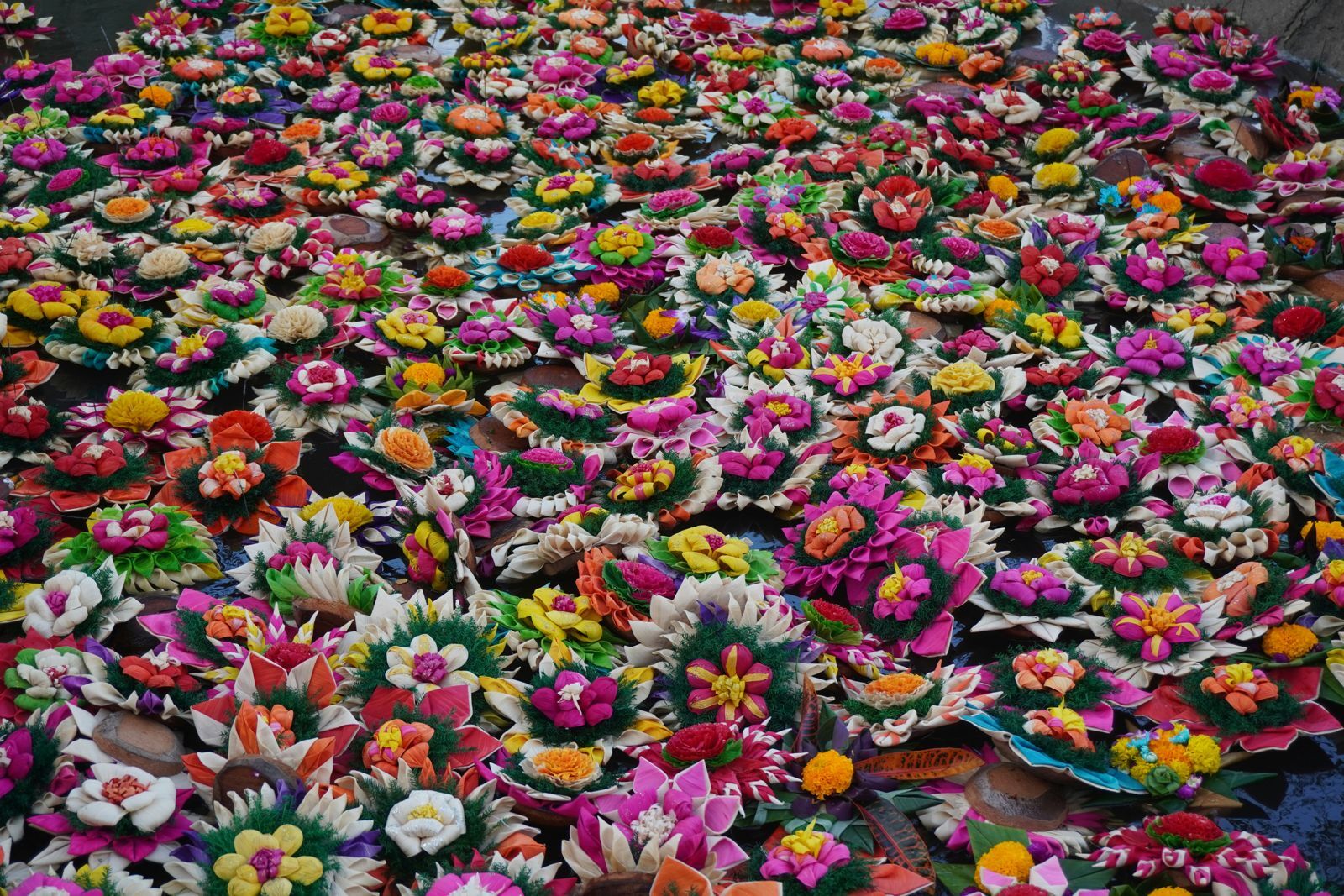
Some of the most memorable festival moments aren't the ones advertised on posters. They're the unexpected invitations. A family offering you food. Someone explaining why they're lighting candles. Children laughing as they show you how to float a krathong. A monk smiling as visitors quietly join an evening procession.
These moments can't be booked. They're earned through simple kindness, patience and respect.
Respect also means thinking about the impact we leave behind. Dispose of rubbish properly. Treat temple grounds with care. Be considerate when taking photographs. Support local businesses where you can. If a festival uses environmentally friendly materials, choose those where possible.
Small actions matter. They help preserve these celebrations for future generations while showing appreciation to the communities that welcome us.
Modern travel sometimes encourages us to experience everything through a camera lens. Take the photograph. Film the moment. Upload it immediately. There's nothing wrong with capturing memories. Just don't forget to create them as well.
Some of the most meaningful experiences happen when the phone stays in your pocket and you simply become part of the moment. Thailand has a wonderful way of rewarding people who slow down.
Long after the lanterns have floated away. Long after the water has dried. Long after you've returned home. The thing you'll probably remember most won't be the festival itself. It will be the people. The conversations. The smiles. The generosity. The quiet moments that reminded you you weren't simply watching Thai culture.
For a short while, you were sharing it.
“The best way to experience Thailand's festivals isn't to stand on the outside looking in. It's to join with humility, celebrate with gratitude and leave with respect.”
Thailand's festivals are among the country's greatest treasures. They fill the streets with colour. The temples with quiet reflection. The rivers with light. The skies with lanterns. And homes with families returning to spend precious time together.
To visitors, they can be unforgettable spectacles. To Thai people, they are often something much more personal. They celebrate faith. Family. Community. Gratitude. Respect. And the traditions that have connected generations for centuries.
The longer you spend in Thailand, the more you begin to understand that festivals aren't separate from everyday life. They simply shine a brighter light on the values that already exist throughout the country.
If you approach them with curiosity, patience and genuine respect, you'll discover far more than beautiful photographs. You'll experience moments of kindness and generosity that stay with you long after the celebrations have ended.
And perhaps that's the real gift of Thailand's festivals. Not simply the events themselves. But the people who invite you to share them.
Next Guide
If festivals reveal how Thailand celebrates together, food reveals how Thailand lives together. Meals are rarely just about eating. They're about family. Friendship. Community. Sharing. Hospitality.
From busy street food stalls to family kitchens and local markets, Thai food tells the story of the country as clearly as any guidebook ever could. Understanding Thai food culture isn't about learning what to order. It's about understanding why food holds such an important place in everyday Thai life.
Next Guide: Understanding Thai Food Culture